 Tanya Sachdev
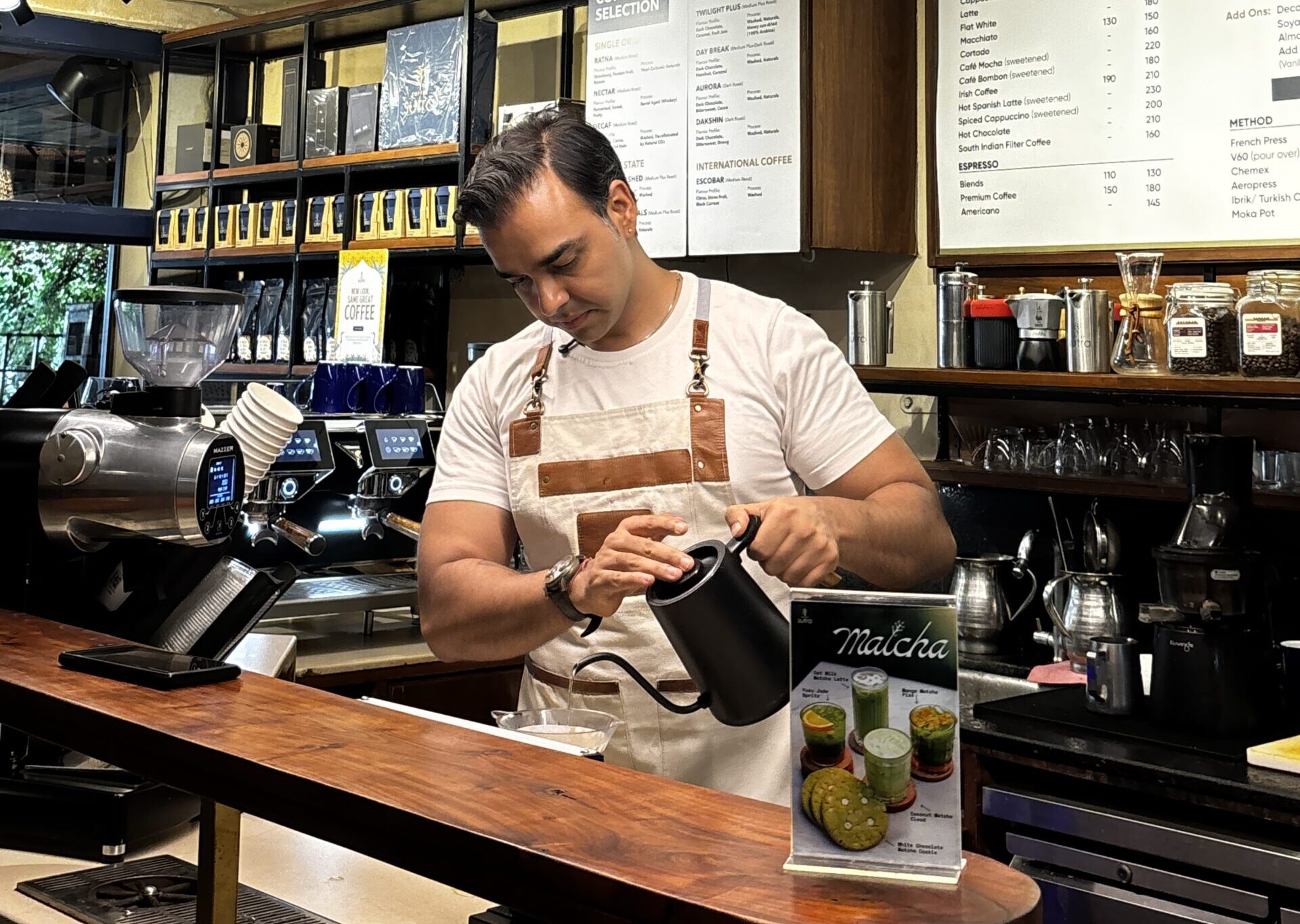
In India’s booming cafe culture, Dushyant Singh is building Coffee Sutra to redefine a coffee movement.
Dushyant’s work is shaping the future of India’s premium beverage industry.
In this exclusive conversation with Let’s Expresso, he shares how a Tier II founder is creating national impact — one brew, one brand, and one bold vision at a time.
– What first pulled you toward coffee as a serious business, not just a passion?
I’ve been in the hospitality industry for nearly 15 years, working across a wide range of cuisines from Italian to Pan-Asian and more while always serving quality coffee alongside our food. Over the last five to six years, we’ve seen coffee evolve from just a beverage into a global experience, with a much deeper cultural and emotional connection to people.
We were already roasting our own beans for our restaurants, and that sparked an idea: why not create a standalone café that celebrates this journey? That’s how Coffee Sutra was born an experience centre dedicated to the art, craft, and story of coffee.
– Why did you choose to build Coffee Sutra as an ecosystem instead of just a café brand?
We wanted people to do more than just drink good coffee we wanted them to understand it. From flavour profiles and origins to different brewing methods, our vision was to build awareness and appreciation around coffee. That’s why we created a specialty café focused not just on serving a great cup, but on offering a meaningful and educational coffee experience.
– What does “Bean to Brew” mean to you personally as a founder?
For me, “Bean to Brew” represents respect and responsibility at every stage of the coffee journey. It means understanding where the coffee comes from, valuing the farmers who grow it, and being actively involved in sourcing, roasting, and brewing.
It’s not just a process it’s a mindset built on transparency, quality, and care. When we truly understand and control the journey from bean to cup, we’re able to offer our guests an experience that is honest, consistent, and deeply meaningful.
– How do you see India’s specialty coffee movement evolving right now?
India’s specialty coffee movement is growing rapidly and moving beyond niche audiences into mainstream awareness. Today, consumers are not just drinking coffee they’re curious about its origins, flavour profiles, processing methods, and the stories behind the beans.
This shift is being driven by a more educated audience, the growth of café culture, and innovators who prioritise quality, sustainability, and transparency. Baristas and enthusiasts are experimenting with diverse brewing methods, micro-lot beans, and creative fusions.
Young consumers, in particular, are exploring lighter roasts, single-origin coffees, and espresso-based drinks with more complexity. There’s also a growing interest in traceability and farmer connect. People want to know who grew their coffee, how it was grown, and how those choices affect taste and quality. This curiosity is encouraging direct trade, better premiums for farmers, and higher standards across the value chain.
– Why is Indian-origin coffee uniquely positioned on the global stage?
Indian-origin coffee stands out globally because of its diversity, depth, and steadily improving quality standards. Coffee in India is grown across varied microclimates from the Western Ghats to high-altitude estates resulting in flavour profiles that range from chocolatey and nutty to fruity and spiced.
Our shade-grown practices, often intercropped with spices and fruits, add natural complexity and character that distinguish Indian coffee internationally. Additionally, there is an increasing focus on sustainability, traceability, and ethical farming.
As roasting and processing techniques continue to evolve, Indian coffee is gaining recognition not just for volume, but for craftsmanship, consistency, and unique terroir.
– What has building from Jaipur given you that a metro city wouldn’t?
Jaipur’s coffee culture has evolved significantly over the past few years. Once known primarily for tea, the city has embraced coffee as part of its lifestyle. Today, consumers here are more informed and experimental they understand different brews, appreciate origins, and are curious about global trends.
What sets Jaipur apart is that its coffee culture has grown organically and in a community-driven way, unlike metro cities where trends are often led by global chains or aggressive marketing. The city has developed its own coffee identity rooted in authenticity and curiosity.
People here genuinely want to understand coffee from roast profiles and origins to manual brewing techniques. This shift has been driven by local specialty brands and independent roasters who have introduced global practices in a relatable way.
Interestingly, the coffee audience in Jaipur now spans all age groups, including professionals, travellers, and older consumers. Cafés have become spaces for conversation, art, and collaboration, giving coffee a strong community-led identity.
– What was the hardest mindset shift you had to make while scaling from cafés to an ecosystem?
Our goal was never just to open another café we already had restaurants. The vision was to build a brand that creates a complete experience around coffee. That’s why we established a coffee lab for roasting and a training centre where people can learn and grow with us.
Building this in a city like Jaipur was challenging. Creating awareness and changing mindsets around coffee took time. But through persistence and continuous learning, we’ve grown into a brand that is now recognised nationally. Our purpose has always been clear: to go beyond being a café and build a complete coffee ecosystem.
– What do global hospitality brands look for when they partner with Coffee Sutra?
Today, global hospitality brands aren’t just looking for suppliers they’re looking for partners who can help them deliver a complete coffee experience.
At Coffee Sutra, we don’t simply supply beans. We collaborate closely, shaping the journey from the first discussion to the final cup. We’ve worked with some of India’s finest hotels, creating immersive experiences that go far beyond what’s served. From origin and roasting to brewing and presentation, we bring the entire story to life, helping our partners offer something meaningful, memorable, and engaging.
– How do you maintain quality while expanding across multiple locations and partners?
Quality and innovation remain our top priorities, regardless of scale. What stays constant at Coffee Sutra is our commitment to uncompromised quality and consistency. From sourcing to brewing, every step is carefully curated to ensure excellence in taste, aroma, and experience.
Equally important is investing in our people. We train our baristas not just to follow processes, but to truly understand coffee. We encourage curiosity through exposure to trends, hands-on experimentation, and monthly trial sessions focused on new brews, fusions, and techniques.
– What role do sustainability and sourcing play in your business decisions?
Sustainability and sourcing are central to every decision we make. A great cup of coffee begins at the farm, which is why we work closely with growers and trusted partners to ensure ethical practices, fair relationships, and consistent quality.
We focus strongly on traceability and long-term partnerships that support farming communities while protecting the environment. In our cafés, we also promote sustainable practices such as reusable bamboo cups and coffee puck collection for composting or planting at home.
– What’s the boldest vision you have for Coffee Sutra in the next five years?
Our vision is to build a strong presence across Tier 2 cities while selectively expanding into Tier 1 markets. We want Coffee Sutra to be recognised not just as a coffee brand, but as a trusted and complete coffee experience—known for quality, consistency, and authenticity.
Every interaction with Coffee Sutra should reflect our passion for the craft and build confidence among guests, partners, and collaborators.
– Complete this sentence: “Coffee Sutra exists to…”
Coffee Sutra exists to make specialty coffee a shared experience, not an exclusive one.
-As a self-made entrepreneur, how has continuous learning shaped your ability to build and scale brands like Coffee Sutra?
I travel frequently and observe how the global coffee industry is evolving. Earlier, people mainly ordered cappuccinos. Today, they’re exploring flavours like pistachio and hazelnut, which enhance the overall experience.
Over time, consumer preferences have expanded—from hot versus cold coffee to lattes, cappuccinos, and now a wide range of creative, flavoured options. We learn from these global trends and adapt them for our cafés, always keeping our guests at the centre of what we do.
-You’ve worked with global hospitality brands and international standards. How important is exposure to global education and networks in building a world-class Indian business?
We currently work with brands like Fairmont and Novotel, and earlier partnered with Jamie Oliver’s Kitchen. These brands expect more than good coffee they expect excellence in brewing, presentation, and overall experience.
In a market where many players sell coffee, we focus on education helping partners and guests understand what they’re drinking and how to identify quality. When brands work with us, they receive more than a beverage; they gain a value-driven experience that sets them apart.
– Coffee Sutra is built on deep expertise—from sourcing to machinery to consulting. What kind of learning mindset do you think founders need to stay relevant in such a fast-evolving industry?
Our expertise comes from being involved in every stage of the coffee journey, starting at the farm and extending to processing, equipment, service, and training. Each element is equally important.
We ensure our machinery aligns with the latest innovations and regularly update our practices to meet evolving standards. Whenever we open a new café, we study current trends and integrate relevant learnings. We also visit farms annually to stay updated on new processing techniques and improvements.
– Looking back at your journey, what learning decision had the biggest impact on who you are as a founder today?
One of our biggest learnings has been the importance of structured training and clarity. Anyone joining our brand, regardless of background, needs proper guidance and a clear understanding of our SOPs and values.
This helps individuals grow confidently while strengthening the brand as a whole. For me, ensuring that people understand our value system has been key to building a consistent and reliable organisation.
***************************************************************
Thankyou Dushyant Singh for opening up and sharing your wisdom with us. It’s always great to talk to founders who are building their ventures with passion & purpose. More power to you!
If you are a founder and would like us to share your story, do get in touch at Tanya@variaabl.com.
And before you leave, do read the One-on-One with Dr. Divneet Kaur — CEO & Co-founder, Dermabay. There is so much to learn from her.
Good day!
Tanya


 Tanya Sachdev


 Kritika Manchanda