 Tanya Sachdev
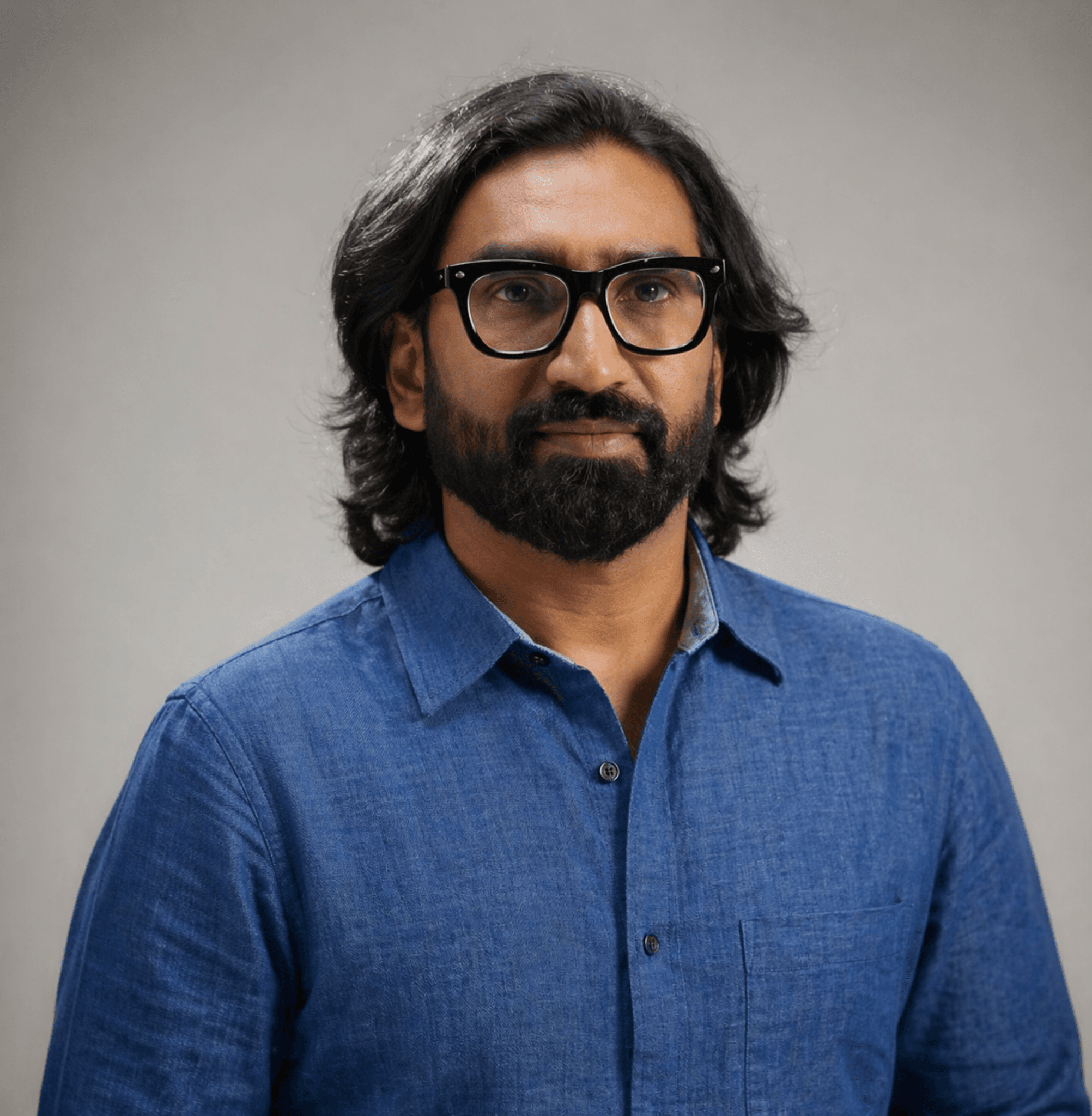
Great organisations are built by people with vision, persistence, and the courage to create. In this interview, Ladeesh PC, Director and Co-Founder of Estilocus, shares his journey, lessons and insights for aspiring entrepreneurs and future leaders.
1. You co-founded Estilocus at a time when the menswear market was becoming increasingly crowded. What problem were you trying to solve, and what personal experiences shaped your entrepreneurial journey?
We founded Estilocus in 2019 in Bangalore, and the problem we were solving was hiding in plain sight: there was a massive, underserved gap between mass-market and premium menswear in India. Walk into a premium brand store and the quality is undeniable, but the price makes everyday wear feel like a luxury far beyond the reach of the common man. Walk into a mass-market option and the prices are accessible, but you compromise on fit, finish, and durability in ways that quietly add up. The Indian man who cares about his style and the way he carries himself either ends up overpaying or compromising on quality. That bothered me deeply.
But Estilocus was never just about filling a price gap. The deeper conviction was about identity. Our philosophy ‘Wear Who You Are’ came from a belief that clothes shouldn’t define a man; they should be an honest extension of who he already is. That’s why we don’t chase trends and we don’t do fast fashion. Everything we build is rooted in what we call Techno-Utopia — the idea that beautiful, functional design can be made accessible through intelligent mass production. Quality doesn’t have to be rare. It just has to be intentional.
2. Looking back on your journey as a founder, what is one lesson about leadership that every aspiring entrepreneur should learn earlier than they usually do?
The biggest thing I’d want any aspiring entrepreneur to know is that many of the skills that helped you succeed inside a big company won’t be the same as those needed to be a founder. I spent 19 years at Reliance, Aditya Birla, Airtel, Havells. I understood scale, systems, and how to operate within structure. All of that was invaluable. But the moment I stepped out to build Estilocus, I knew for sure that the game had changed entirely. The support structure that used to hold you up is gone. All decisions are yours. Every error is yours.
That has taught me the difference between confidence and conviction. Confidence can be achieved. When nothing is working the way you have planned, conviction keeps you going. That is what keeps you from pursuing every shiny thing or shortcut that distracts you from what you were trying to build.
We are growing year on year. But that didn’t come from moving fast. It came from staying clear on what Estilocus stands for and refusing to compromise on that even when it would have been easier to.
3. Every founder faces moments of doubt. Was there a defining challenge that tested your conviction, and how did you navigate it?
Honestly, we hadn’t even found our footing yet when the ground shifted completely beneath us.
Estilocus launched at the end of 2019 — we were barely a few months old, full of energy, building our product portfolio, figuring out our market. And then March 2020 happened. The world stopped. And so did we.
We were sitting on a significant amount of manufactured stock, products we had poured our early capital, belief, and effort into, with nowhere to send it. Textile retail had shut down indefinitely. There were no customers, no channels, no timelines. Just uncertainty. That was the moment I genuinely asked myself: Do we stop here? Is this over before it even began?
What kept me going wasn’t a strategy or a pivot plan. It was a simpler, quieter conviction — that the problem we set out to solve for men’s fashion in India hadn’t gone away. The market would come back. The need was real. And if we gave up at the first real test, we were never serious to begin with. So we waited. We protected what we had built. We used that time to sharpen our thinking, on the brand, on the product, on what Estilocus truly stood for. And when things opened up, we were ready to move, not just survive, but move with more clarity than before. Looking back, the lockdown didn’t break Estilocus. In a strange way, it forced us to build a stronger foundation before we scaled.
4. Many Indian men today seem to be moving away from impulse buying and fast fashion. What changes are you observing in consumer behaviour, and what is driving this shift?
Yes, this shift has been one of the most exciting things to witness. Indian men are now buying smarter than ever. They are not picking something up because it landed on their feed or because there’s a sale. Men are pausing and asking – will this actually work in my life? Will it last? This is a fundamentally different consumer from five years ago.
Fit, comfort, and durability are now just as important as how something looks. People want both – and they’re willing to wait rather than impulse buy something that disappoints them in a month. The bigger shift is now Men don’t make trend-driven choices towards clothing that feels more personal and understated. Men are less interested in dressing to signal something and more interested in dressing to reflect who they actually are. And identity, once it takes root, is far more loyal than any trend.
This isn’t just a metro phenomenon either. We’re seeing it strongly in Tier 2 and Tier 3 markets, across age groups. The appetite for considered clothing is growing everywhere. And honestly, this is the market catching up to the conviction we started Estilocus with. “Wear Who You Are” wasn’t just a tagline – it was a bet on where the Indian consumer was heading.
5. We’ve moved from an era of oversized logos and trend-driven purchases to more thoughtful wardrobes. Why do you think modern professionals are becoming more intentional about how they dress?
I think it’s simple, really. People are becoming more intentional about everything in their lives – what they eat, how they spend their time, what they consume. Clothing was always going to follow.
The logo era was an era of borrowed identity. You wore a big brand name to signal something – status, taste, aspiration. But as people grow more secure in who they are, this borrowed identity fades. The question shifts from “what does this say about me?” to “does this actually reflect me?”
What we’re seeing among Professionals today is that they aren’t building bigger wardrobes – they’re building smarter ones. Fewer pieces but multiple occasions covered. For them fit, comfort, durability matters as much as looks now. They’re not buying for a single occasion or because a trend pushed it into their feed. They’re building wardrobes that work across their lives.
And a professional building a career understands the game is long. He doesn’t want pieces that expire every season. He wants things that last – in quality and in relevance and this is what we at Estilocus are offering.
6. Do you believe the way a person dresses influences confidence, leadership presence, and career opportunities? Have you seen examples where style became a professional advantage?
Absolutely, without question. And I say that not just as someone in the business of clothing – I say it because I’ve lived it across nearly two decades in corporate environments.
I’ve been in boardrooms, in field operations, in fast-moving organizations. In every one of those settings, the person who walked in with clarity in how they presented themselves commanded a different kind of attention. Their outfit was not expensive, not loud, but considered. It is not superficial, we’re wired to read signals, and clothing is one of the most immediate ones.
When what you wear aligns with who you are, something shifts internally too – you’re not adjusting or performing, you’re just present. That kind of groundedness is a leadership quality most people overlook.
Style alone won’t take you far, but paired with substance, it amplifies everything you bring to the table. And in a competitive professional environment, that amplification matters more than most people are willing to admit.
7. How have men’s silhouettes evolved over the last decade, and what does this evolution tell us about changing lifestyles, aspirations, and identities of Indian men?
A decade ago, Indian professional men were dressed for one setting – the office. Slim-fit shirts, structured trousers, everything was formal-first. Their wardrobe had one job and it did that one job.
But today those same men are moving from a client meeting to a casual lunch to a weekend outing – sometimes in the same outfit. Their life has gotten more fluid and their wardrobe has to keep up. So silhouettes relaxed. Fits became more considered – not oversized for the sake of it, not so tailored you can’t breathe, but something you can actually live in. The shirt became the anchor piece of the modern Indian man’s wardrobe.
But what I find more interesting is what this tells us about identity. Indian men today don’t define themself solely by their profession alone. The Indian man is an entrepreneur, a father, a traveler, someone who cares about how he shows up in every part of his life – not just at work. And he wants his wardrobe to reflect all of that, not just nine to six.
8. Many of our readers are professionals looking to grow their careers, earn promotions, and build greater confidence. If you could give them three practical style investments that deliver the highest return, what would they be?
Before I give you three investments, let me give you one truth: the most expensive mistake most professionals make with style is spending money before they understand themselves.
1. Know Your Body, Own Your Silhouette
Fit is the single highest-return investment in style. Not the brand. Not the price tag. The fit. A well-fitted shirt from a modest brand will always outperform an expensive piece that doesn’t suit your frame. Understand your body type, learn what silhouettes work for you, and every purchase after that becomes a confident decision rather than a hopeful guess.
2. Understand Your Colors
Most people dress for trends. The ones who consistently look sharp dress for themselves —
specifically, for their skin tone and undertone. Once you know which palette naturally complements you, you stop chasing what’s “in” and start building a wardrobe that always looks intentional. This is quiet power. It’s noticed, even when people can’t explain why.
3. Become Your Own Stylist
Once you have the first two figured out, you don’t need anyone to tell you what to wear. Every style decision becomes simple, clear, and yours. That’s true confidence — not dressing to impress a room, but dressing in a way that is unmistakably you.
And a word of caution: chasing trends is the most futile way to invest in fashion. Trends are designed to expire. Your identity isn’t.
9. When you think about success today, what does a well-lived life look like to you beyond business growth and professional achievement?
Success, for me, has a very simple but demanding definition — good health, great relationships, and ample choices. Everything else is noise. We live in a world that glorifies cash wealth. But you can be extraordinarily wealthy and completely trapped — trapped by obligations, by fear, by the very money you chased. That, to me, is not a well-lived life. Wealth without choice is just a gilded cage.
A well-lived life, in my terms, is one where you are present for all of it — not just the wins. The difficult seasons, the quiet ordinary days, the moments that don’t make it to anyone’s highlight reel. Accepting every moment, not only the good ones, is where real living actually happens. That kind of acceptance takes more courage than building a business.
And perhaps most importantly — a well-lived life has to be more giving than receiving. The math of a meaningful life runs in that direction. Always. My relationship with money is intentional. Control your money so it expands your choices. The moment you let money control you, you’ve handed over the steering wheel of your own life to something that has
no interest in where you actually want to go.
***************************************************************
Thankyou Ladeesh PC for opening up and sharing your wisdom with us. It’s always great to talk to founders who are building their ventures with passion & purpose. More power to you!
If you are a founder and would like us to share your story, do get in touch at Tanya@variaabl.com.
And before you leave, do read: Alisha Baheti, Owner MSC Maratha Royals shares her success formula There is so much to learn from her.
Good day!
Tanya


 Tanya Sachdev


 Kritika Manchanda