 Tanya Sachdev
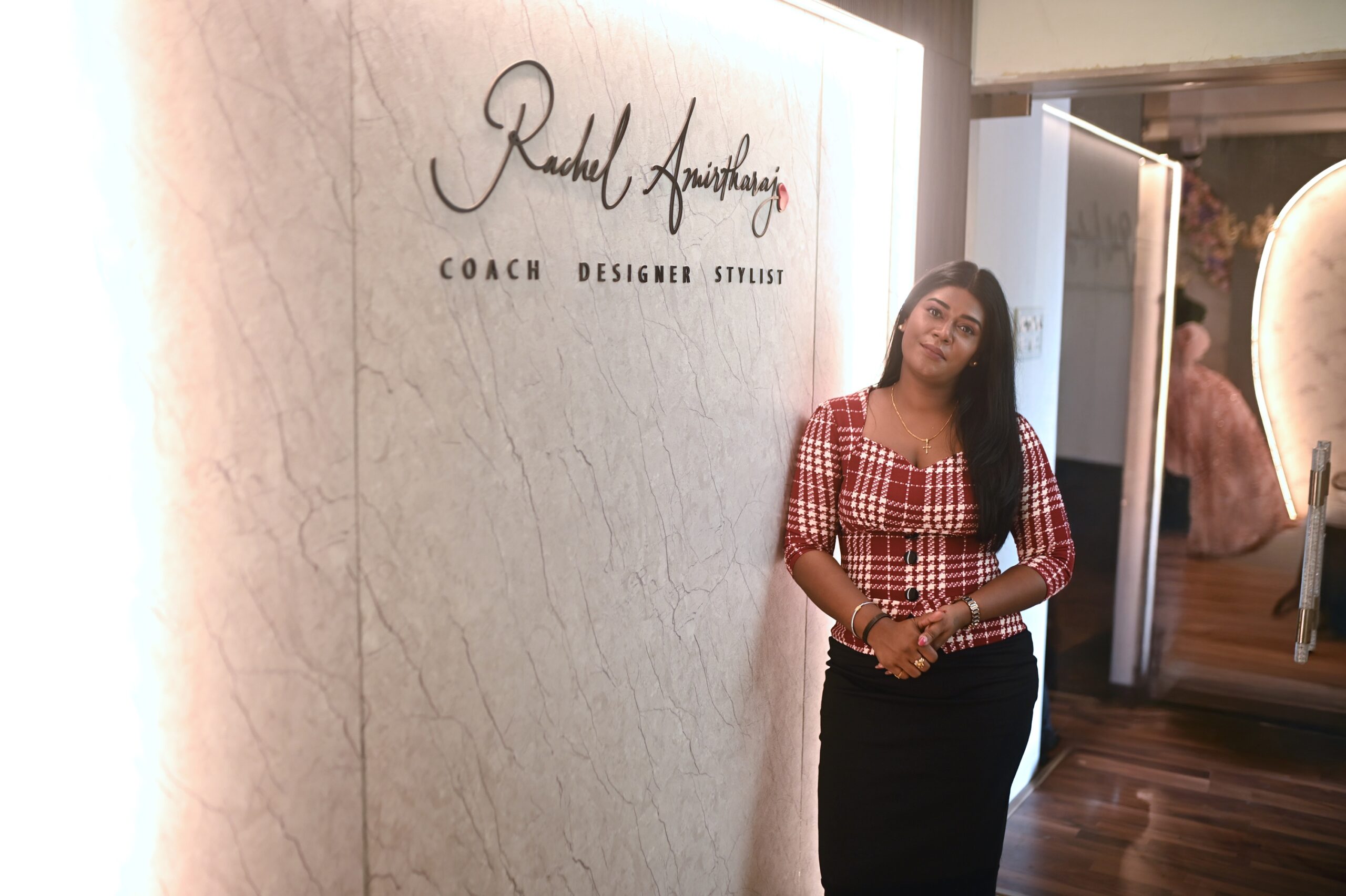
Designer Rachel J Amirtharaj shares her life, entrepreneurial journey, leadership mantra & importance of education in this exclusive interview with Let’s Expresso. Read on & take notes.
1. Your journey in fashion spans over 13 years across bridal couture, bespoke groom wear, celebrity styling, and film costume design. What were some defining moments that shaped you as a designer and entrepreneur?
My journey into fashion did not begin from a privileged background. I come from a very humble family where hard work and perseverance were deeply ingrained values. From a young age, I understood that if I wanted to build something meaningful in life, it would require discipline, resilience, and faith—not only in myself, but also in God’s guidance over my journey.
Fashion became a way for me to express creativity, but also a path to create something larger than myself. Early in my career, working on bridal couture, celebrity styling, and film costume design exposed me to very different aspects of the industry. Each environment demanded precision, storytelling, and the ability to perform under pressure.
One of the most defining moments in my journey was starting my own label, La Fantaisie. That transition from designer to entrepreneur changed everything. I realised that being skilled at design was only one part of the journey. Building a brand required understanding business, leadership, systems, and long-term strategy.
To strengthen that aspect of my career, I pursued management learning through programs associated with IIM Bangalore, which gave me valuable exposure to how businesses operate and scale. It helped me think beyond garments and start building something sustainable with clarity and purpose.
2. Leadership in the creative industry often requires balancing artistic vision with business realities. How do you lead your team while maintaining creativity and innovation in your brand?
Creative leadership is about balancing freedom with structure. I believe teams perform best when they are given the space to explore ideas, but within a framework of clear standards and expectations.
In our studio, creativity is always guided by craftsmanship and purpose. Every design must not only look beautiful but also function well in terms of fit, structure, and client comfort.
At the same time, strong systems, timelines, and accountability are essential. When there is clarity in execution, creativity becomes more refined rather than chaotic. My role as a leader is to ensure that both creativity and discipline coexist.
3. Every entrepreneur faces challenges. Can you share one of the toughest obstacles you encountered while building your fashion brand, and how you overcame it?
One of the toughest challenges I faced was during the pandemic, when the entire fashion and events industry came to a standstill. Weddings were postponed, productions were paused, and there was a lot of uncertainty.
That phase required me to pause and reassess everything. Instead of reacting with fear, I chose to rebuild with clarity. I used that time to refine my vision, strengthen my business foundation, and rethink how I wanted to position my brand in the long term.
It was not an easy phase, but it taught me resilience, patience, and the importance of staying grounded even when things are uncertain.
4. As a successful woman entrepreneur in a competitive industry, what unique challenges do women face in business today, and how can they overcome them?
Women today are balancing multiple roles— professional, personal, and societal expectations, all at the same time. This can be challenging, especially in competitive industries.
However, women also bring unique strengths into leadership. Qualities like emotional intelligence, attention to detail, and the ability to build meaningful relationships are powerful advantages.
The key is to trust your own capability. Women should not hesitate to take ownership of their vision and lead with confidence. When that mindset shifts, opportunities naturally follow.
5. Many aspiring designers struggle to transition from creativity to entrepreneurship. What advice would you give young designers who want to build sustainable fashion businesses?
We have an incredible number of talented designers, artists, and craftsmen. Our country is rich with skill and creativity. However, what we often lack is formal exposure to entrepreneurship. Many people know how to design beautifully, but they are not taught how to price their work, build systems, manage clients, structure production, or grow a business sustainably.
In India, business education is not always integrated into creative training. As a result, many talented designers struggle to convert their skills into successful enterprises. My advice to young designers is to learn both sides of the craft. Develop your creativity, but also study the fundamentals of business—branding, operations, financial discipline, and customer experience.
At the same time, I believe it is important to stay grounded and patient. Building something meaningful takes time, and there will be uncertainty. In those moments, having faith and inner conviction helps you stay steady and continue moving forward.
6. Education and learning play a crucial role in shaping careers. How has education influenced your journey, and what role do you think it plays in the success of creative professionals?
Education played an important role in helping me evolve beyond being only a designer.
While experience in the industry teaches you practical skills, structured learning introduces you to strategy, leadership, and systems. My exposure to management learning through programs connected with IIM Bangalore helped me understand how businesses function beyond creativity.
It helped me think about long-term growth, team leadership, and building a brand that can sustain itself over time.
For creative professionals, education does not stop with formal training. Continuous learning, whether through business, design, or leadership is essential.
7. The fashion industry evolves rapidly with trends, technology, and consumer expectations. How do you stay updated and continue learning in such a dynamic field?
Fashion is constantly evolving, but certain principles remain timeless—craftsmanship, structure, and quality.
I stay updated by observing global design movements, understanding changing client preferences and studying new materials and techniques. At the same time, I am careful not to follow trends blindly.
It is important for a designer to have a strong identity. Trends can influence but they should not define your work.
8. Lifelong learning is increasingly considered essential for leadership. What are some habits or practices you follow to keep evolving both personally and professionally?
Curiosity is one of the most important habits for growth. I constantly observe, learn, and draw inspiration from different forms of art, culture and design.
Professionally, I regularly evaluate my work and look for ways to improve both design quality and the client experience.
Personally, reflection and discipline help me stay focused. Growth comes from being intentional about both learning and execution.
9. Looking back at your journey, what are the three most important qualities that helped you succeed as both a designer and a business leader?
Three qualities have been extremely important in my journey.
First is resilience. Coming from a humble background means you learn early that success rarely comes easily. Challenges become part of the journey.
Second is discipline. Creativity alone is not enough. Building a brand requires consistent effort, patience, and commitment to quality.
Third is faith. Alongside continuous learning, I have always believed in trusting the process and in God’s timing. In moments of uncertainty, faith gives me the strength to keep moving forward with clarity.
10. For young women who aspire to enter creative industries like fashion but hesitate due to uncertainty or societal expectations, what message would you like to share with them?
Creative careers often require courage because they do not follow a conventional path. There may be uncertainty, but that is part of the journey.
My message to young women is to believe in their abilities and not limit themselves based on fear or external expectations. With discipline, continuous learning and inner strength, it is possible to build a meaningful and successful career.
Every journey starts with a decision to begin. Once you take that step, clarity follows.
—————————————–Interview Ends————————————–
Thank you for reading. I’ll be back soon with another powerful story. Until then, keep learning, keep growing and take care of yourself.
I work closely with senior leaders to help them make strategic executive education decisions that create real leadership and economic impact. Through Variaabl Education, we partner with leading global universities to offer programs aligned with where leaders are headed next globally, professionally and personally.
If you’re ready to invest in your next level of growth, connect with me at Tanya@Variaabl.com to schedule a conversation and explore a program that aligns with your aspirations and elevates your journey.


 Kritika Manchanda
 Tanya Sachdev